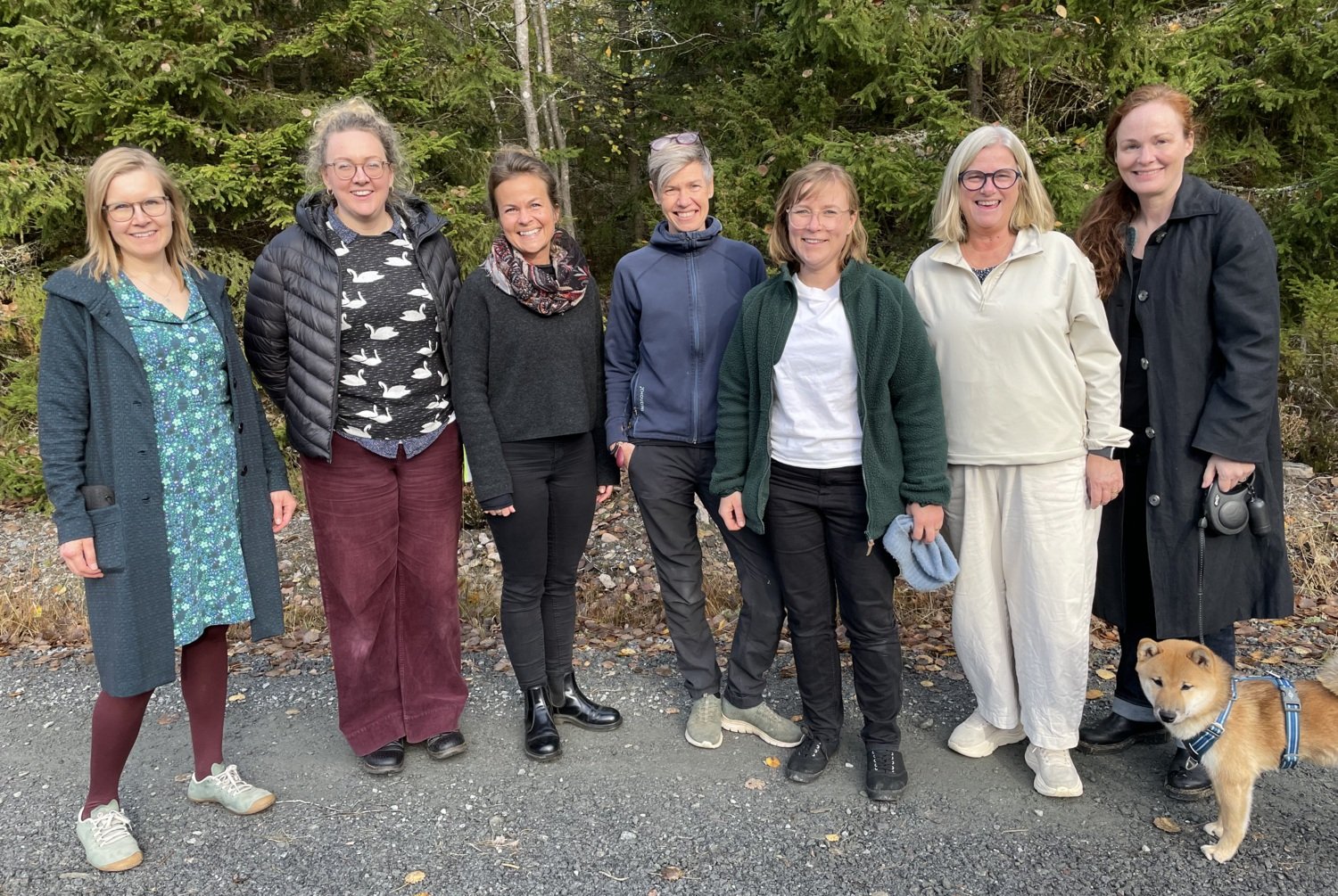
Malin Edqvist's team

Our research focuses on improving care during pregnancy, childbirth and the postnatal period, with a particular emphasis on respectful and person-centred care.

a group of people
Malin Edqvist team

Our research focuses on improving maternity care, with a particular emphasis on respectful and person-centred care. Our projects include research related to midwifery education, as well as implementation research examining how midwifery innovations and interventions can be effectively introduced and sustained in maternity care. The research is conducted nationally and through collaborations with international partners.

TeamBirth-SWE

illustration
Team Födsel

A care process to strengthen involvement, participation, teamwork, and patient safety

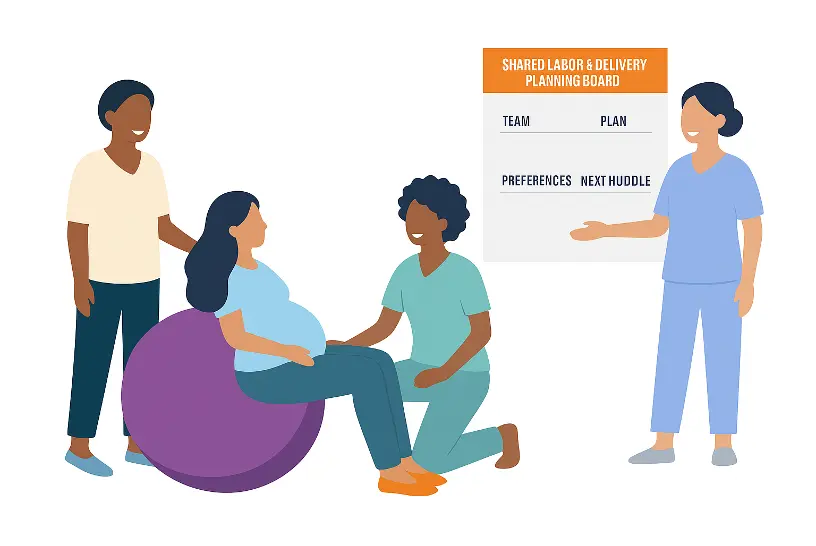
TeamFödsel is a care process in which midwives, assistant nurses, and physicians conduct structured huddles in the birthing room together with the woman giving birth and her partner or support person. Decisions are made collaboratively and documented on a shared planning board in the room. The process, originally known as TeamBirth, was developed by Ariadne Labs in collaboration with Harvard T.H. Chan School of Public Health. TeamFödsel is the Swedish adaptation of TeamBirth, tailored to the Swedish maternity care context.

The aim of TeamFödsel is to strengthen communication and participation during childbirth and thereby contribute to more person-centred and respectful care, enhanced teamwork, and improved patient safety.

The project is funded by the Swedish Research Council, Region Stockholm, the Swedish Research Council for Health, Working Life and Welfare (FORTE), the Swedish Patient Insurance (LÖF), and the Swedish Infant Foundation (Spädbarnsfonden).

loggo
Research funders Team Födsel

Adapting TeamBirth to the Swedish context 

TeamFödsel was adapted to the Swedish context through a pilot project at Karolinska University Hospital in Solna and Huddinge during 2021–2022. Malin Edqvist first learned about TeamBirth at a European conference in 2021. Following the conference, contact was established with Ariadne Labs, and a formal research collaboration was initiated in 2022.

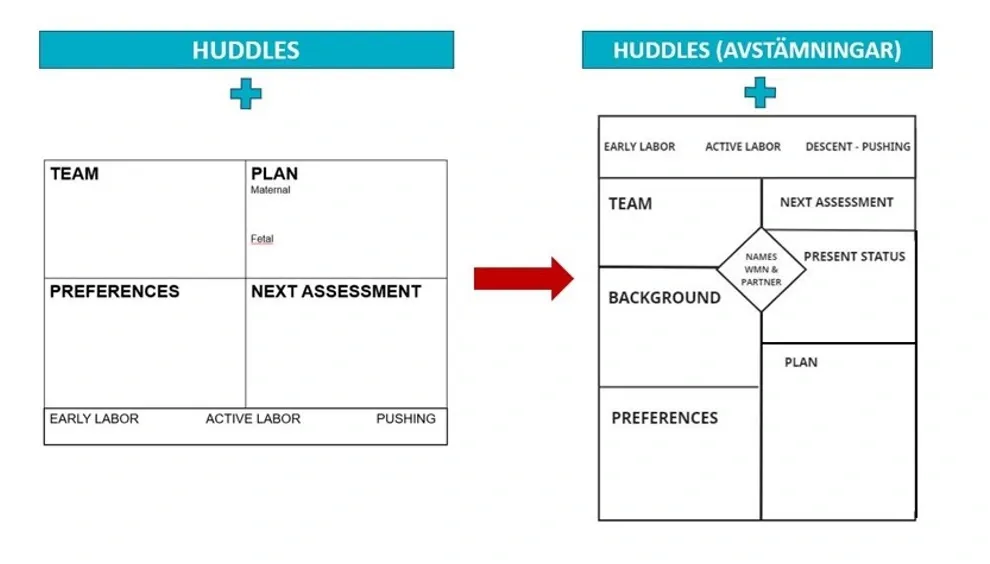
The teams worked actively to gather and respond to feedback from women giving birth and their partners. The section of the board displaying labour progress was considered important to highlight and was therefore moved to the top of the board. It was also important to emphasise that although the care process is based on team collaboration to support involvement, participation, shared decision-making, and patient safety, the woman giving birth and her partner remain at the centre of care. To reflect this, they were allocated a dedicated central section on the board.

The adaptation and implementation process was iterative, with small-scale testing and refinements based on feedback from women, partners, and staff. The final version was completed in spring 2022.

At Karolinska University Hospital Solna, the care process is used throughout the continuum of care, from the antenatal ward to postnatal care.

TeamFödsel huddle
Adaptation of the TeamBirth planning board to the Swedish context

Huddles

A fundamental principle of TeamFödsel is that the woman giving birth and her partner or support person are central members of the care team. Without the woman giving birth there is no team. Care is not done to her but with her.

This means that huddles are conducted in the birthing room together with the woman and her partner or support person. A huddle involves pausing to review the situation, discuss options, agree on a plan or decision together, and document it on the planning board.

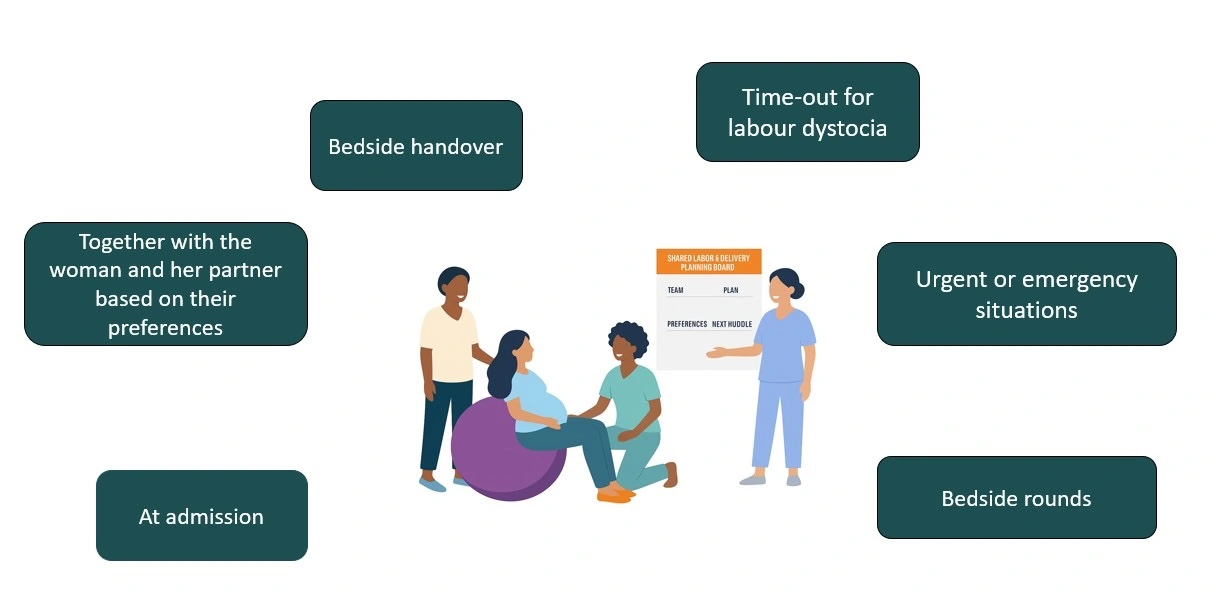
Huddles may be conducted for a variety of reasons. Examples include:

On admission
The care process is introduced, and documentation on the planning board begins. This includes the woman's preferences, information that she considers important for the care team to know and that may be relevant to her care, the current status, the care plan, and the timing of the next huddle.

At the request of the woman and/or her partner, or at the initiative of the care team
Huddles may be used, for example, to evaluate pain relief, rest, energy levels, and labour progress.

Bedside handover
Shift handovers take place in the birthing room. The team reviews what has happened, discusses the current plan, hands over care to the next midwife and nurse assistant.

Time-out for labour dystocia
Rather than discussing the situation separately with a senior colleague and/or physician, the discussion takes place together with the woman and her partner or support person in the birthing room.

Urgent or emergency situations
In urgent and emergency situations, plans and decisions are discussed and documented on the planning board whenever feasible. In the most time-critical situations, the immediate provision of care comes first.

Bedside rounds
For women with underlying medical conditions requiring active treatment or those with high-risk pregnancies, when clinically appropriate.

illustration with women
Examples of situations that may prompt a huddle

Publications

Article: BMC HEALTH SERVICES RESEARCH. 2026;26(1):307
Ready for change? The effect of profession and organization on patient safety culture and organizational readiness for change - a cross-sectional study
Ivert A; Freyland S; Stephansson O; Viirman F; Edqvist M

Publications

All publications from group members

Funding

loggo
Research funders Team Födsel

Staff and contact

Group leader

All members of the group

BESt Sweden

illustration with world map and logos
BESt- IC Photo: -

There is increasing awareness of the impact that the birth experience can have on women and their families, both in the short and long term. Research suggests that structural factors within maternity care can contribute to negative birth experiences, including traumatic birth experiences and what has been described in the literature as obstetric violence. While a traumatic birth experience may arise from a range of factors, the care women receive and the way they are treated have been shown to be of particular importance. Obstetric violence may include a lack of respect, physically or verbally abusive behaviour, or failure to obtain informed consent during pregnancy and childbirth.

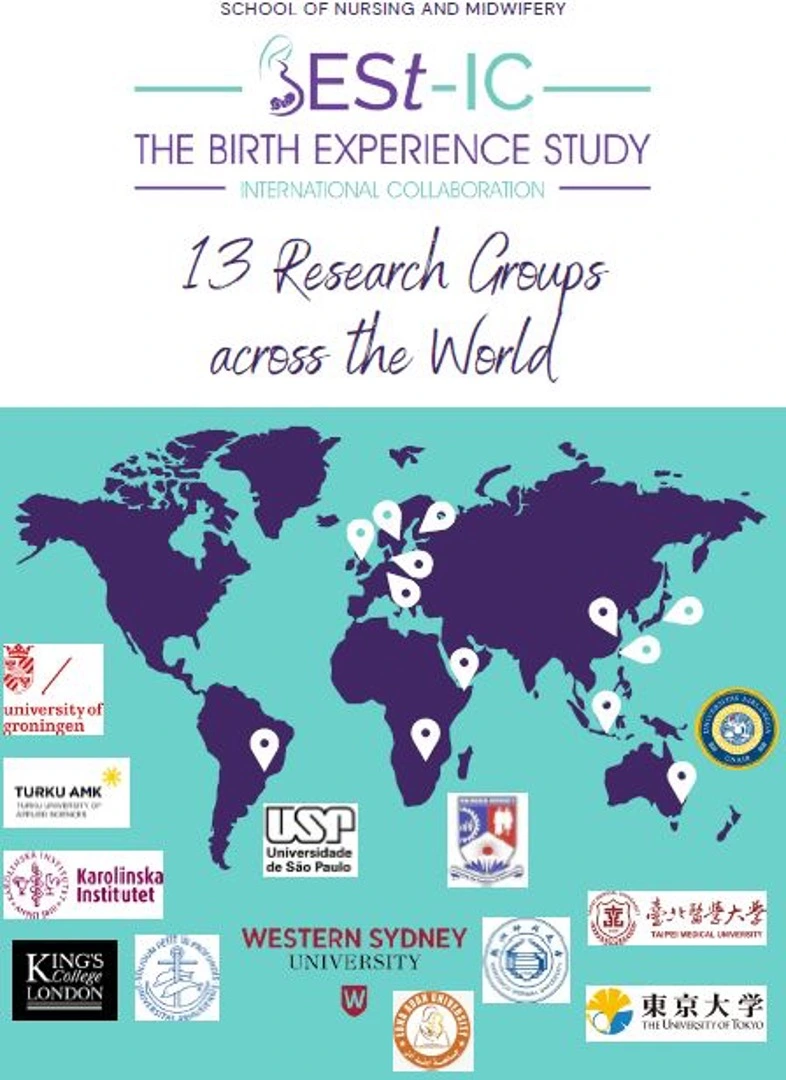
Against this background, the Birth Experience Study (BESt) aims to investigate contemporary experiences of maternity care, with a particular focus on both negative and positive experiences, as well as factors that contribute to respectful, high-quality maternity care. BESt was developed in Australia by Dr Hazel Keedle and Professor Hannah Dahlen at Western Sydney University and was co-designed in close collaboration with consumer organisations.

BESt is being conducted in several countries, and the Swedish BESt study is led by Malin Edqvist as Principal Investigator.

Data collection in Sweden was conducted in 2024, with approximately 18 000 women participating. Analyses for several sub-studies are ongoing.

https://birthexperiencestudy.com/

Hazel Keedle - Western Sydney University

Hannah Dahlen - Western Sydney University